
This article delves into the advanced quick-freezing technology of frozen blackcurrants and its role in safeguarding nutritional value and flavor. It emphasizes the key value of three-round manual screening in enhancing the whole fruit rate and product quality stability. By exploring the principles of professional cold-chain transportation and providing processing adaptation suggestions for multiple scenarios, it assists food processing and supply chain managers in optimizing processes, improving the consistency of blackcurrant-related products, and enhancing market competitiveness, thus helping enterprises effectively explore the European market.
The quick-freezing process of blackcurrants involves rapid freezing. During this process, the formation of ice crystals and their impact on the fruit cell structure are crucial. According to professional research reports, when the freezing speed is fast, the ice crystals formed are small, which can minimize damage to the cell structure. In contrast, slow freezing leads to large ice crystals that can rupture cell walls, resulting in a significant loss of nutrients and flavor. For example, a professional detection report shows that the nutrient retention rate of blackcurrants frozen through advanced quick-freezing technology can reach up to 95%, while traditional freezing methods only retain about 70% of nutrients.
In terms of nutrient retention and flavor maintenance, advanced quick-freezing technology has obvious advantages. A comparison table below shows the differences between traditional freezing and advanced quick-freezing technology:
| Freezing Method | Nutrient Retention Rate | Flavor Maintenance |
|---|---|---|
| Traditional Freezing | About 70% | Significant loss |
| Advanced Quick-freezing Technology | Up to 95% | Well-maintained |
Three-round manual screening plays a vital role in industrial quality control. Through this meticulous screening process, the whole fruit rate of frozen blackcurrants can be significantly improved. Practical data shows that after three-round manual screening, the whole fruit rate can be increased from the original 80% to over 95%, which greatly enhances the stability of product quality.
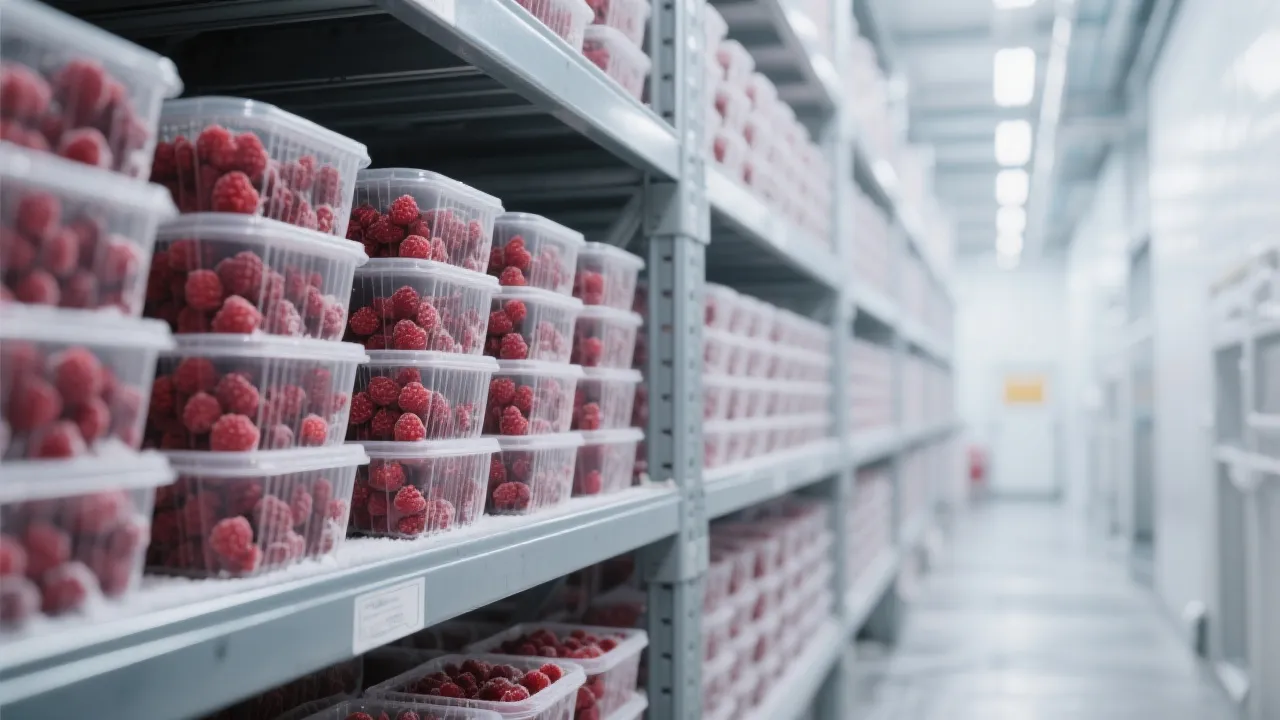
Maintaining a temperature of -18°C is the golden standard for ensuring product safety and quality in cold-chain transportation. According to industry standards, when the temperature is maintained at -18°C, the growth of microorganisms can be effectively inhibited, and the quality of frozen blackcurrants can be well preserved. Deviating from this temperature range may lead to quality deterioration, such as nutrient loss and flavor change.
Frozen blackcurrants can be used in various applications, such as juice, jam, and frozen desserts. For juice production, the recommended processing temperature is around 60°C, and the extraction time is about 30 minutes. For jam production, the sugar content should be controlled at about 60%, and the cooking time is about 40 minutes. These specific process parameters can help food processing enterprises produce high-quality blackcurrant products.
In summary, advanced quick-freezing technology ensures the nutritional value and flavor of frozen blackcurrants. Three-round manual screening significantly improves the whole fruit rate and product quality stability. Maintaining -18°C in cold-chain transportation is crucial for product quality. By following the process suggestions for different application scenarios, enterprises can produce high-quality blackcurrant products.
1. What other methods do you think can further improve the quality of frozen blackcurrants?
2. How do you plan to apply these process suggestions in your actual production?
If you are interested in high-quality frozen blackcurrants and want to learn more about our products and solutions, click here to explore now!

 163
|
163
|
 rapid freezing technology
frozen blackberry quality
food preservation methods
organic frozen fruit
international food safety standards
131
|
frozen blackberry smoothie recipe
organic frozen berries nutrition
healthy smoothie making tips
smoothie texture improvement
natural fruit smoothie applications
96
|
organic frozen blackberry smoothie recipe
frozen blackberry nutrition benefits
healthy smoothie搭配 guide
blackberry smoothie flavor enhancement
frozen fruit storage tips
448
|
frozen black currant supply chain
EU import compliance
HACCP certification
cold chain temperature control
food safety in frozen berries
39
|
Frozen blackcurrant EU standards
HACCP certification supply chain
Frozen fruit quality control
European market food safety
Blackcurrant custom packaging
rapid freezing technology
frozen blackberry quality
food preservation methods
organic frozen fruit
international food safety standards
131
|
frozen blackberry smoothie recipe
organic frozen berries nutrition
healthy smoothie making tips
smoothie texture improvement
natural fruit smoothie applications
96
|
organic frozen blackberry smoothie recipe
frozen blackberry nutrition benefits
healthy smoothie搭配 guide
blackberry smoothie flavor enhancement
frozen fruit storage tips
448
|
frozen black currant supply chain
EU import compliance
HACCP certification
cold chain temperature control
food safety in frozen berries
39
|
Frozen blackcurrant EU standards
HACCP certification supply chain
Frozen fruit quality control
European market food safety
Blackcurrant custom packaging




.png?x-oss-process=image/resize,h_100,m_lfit/format,webp)
.png?x-oss-process=image/resize,h_100,m_lfit/format,webp)
.png?x-oss-process=image/resize,h_100,m_lfit/format,webp)
 English


