
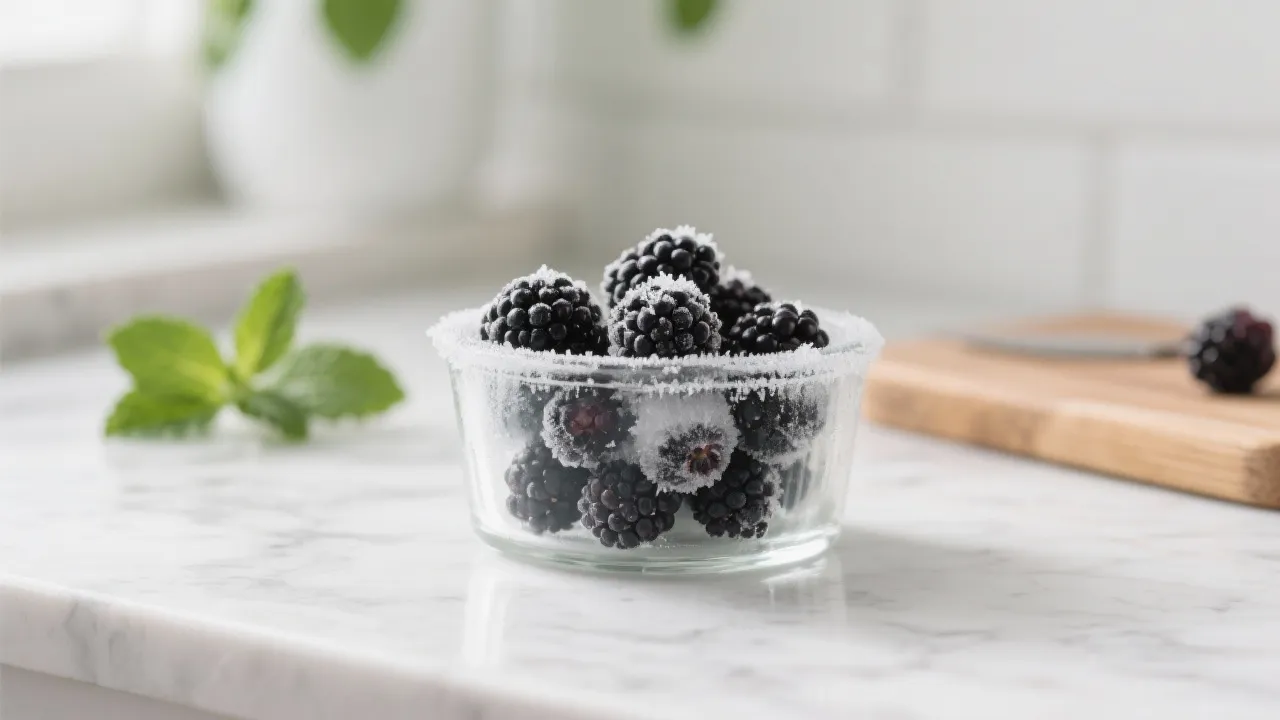
Berries are a “high-reward, high-risk” ingredient: they deliver bright color, natural sweetness, and antioxidant appeal, yet their soft tissue and high water content make them notoriously fragile. In many beverage and food applications, traditional slow freezing produces thawed berries that look dull, weep juice, and taste flatter than expected. Individual Quick Freezing (IQF) was built to solve that exact quality gap—by controlling how fast temperature drops and how ice crystals form inside the fruit.
For R&D teams, production managers, and buyers, the practical question is simple: How does IQF lock in blackberry nutrition and flavor, and what should a factory do to keep it that way during thawing and blending?
The core difference between conventional freezing and IQF is ice crystal size. Slow freezing gives water time to migrate and form larger crystals—those crystals can puncture cell walls, leading to drip loss, mushy texture, and pigment leakage after thaw. IQF drops the temperature so quickly that crystals stay much smaller and more evenly distributed.
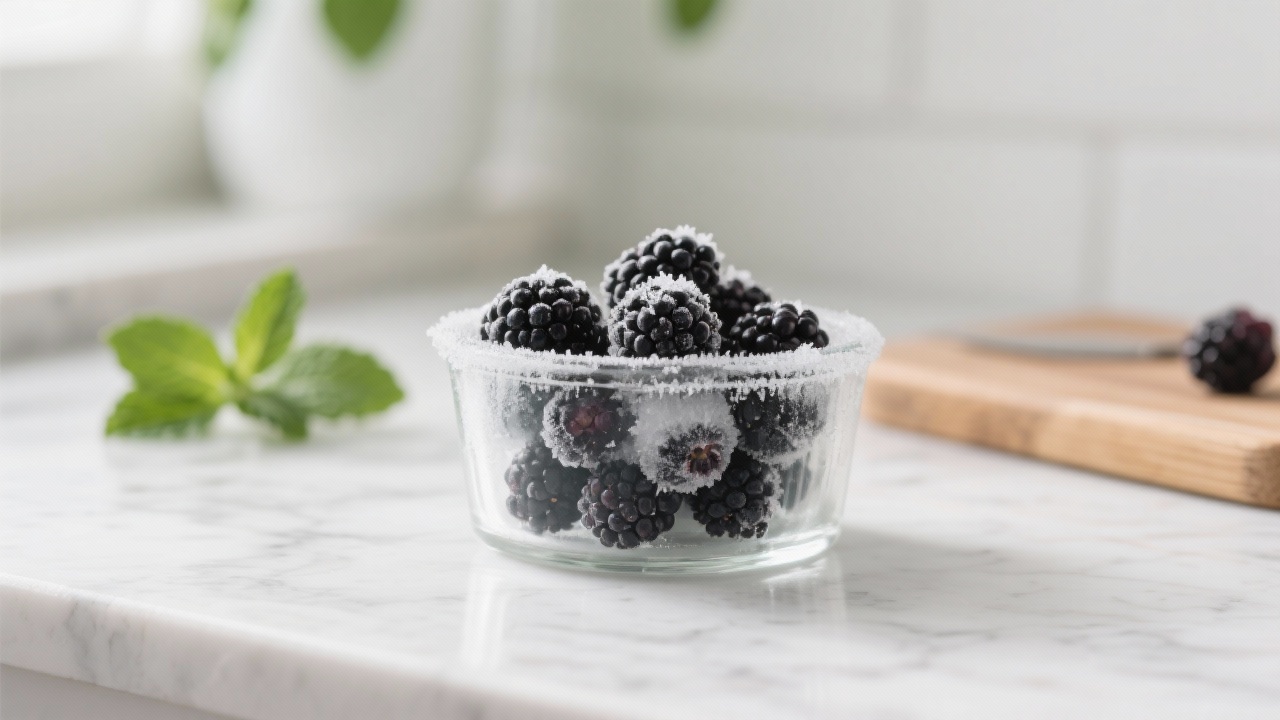
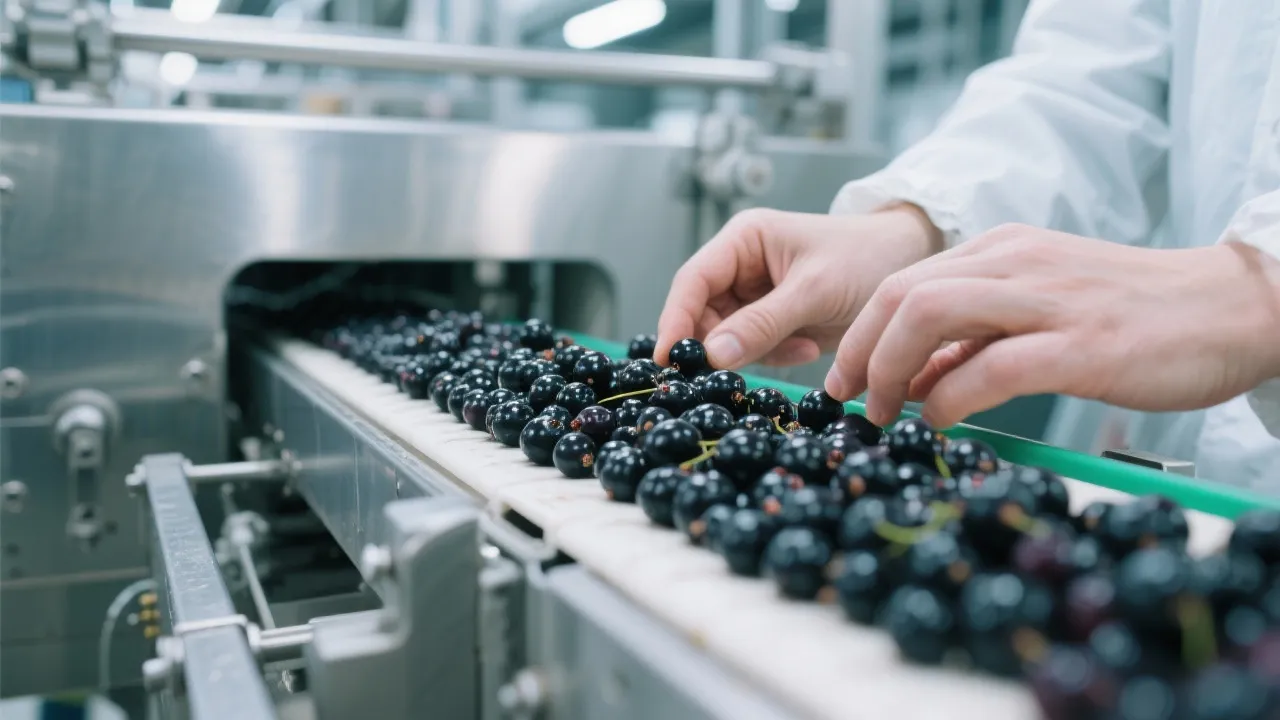
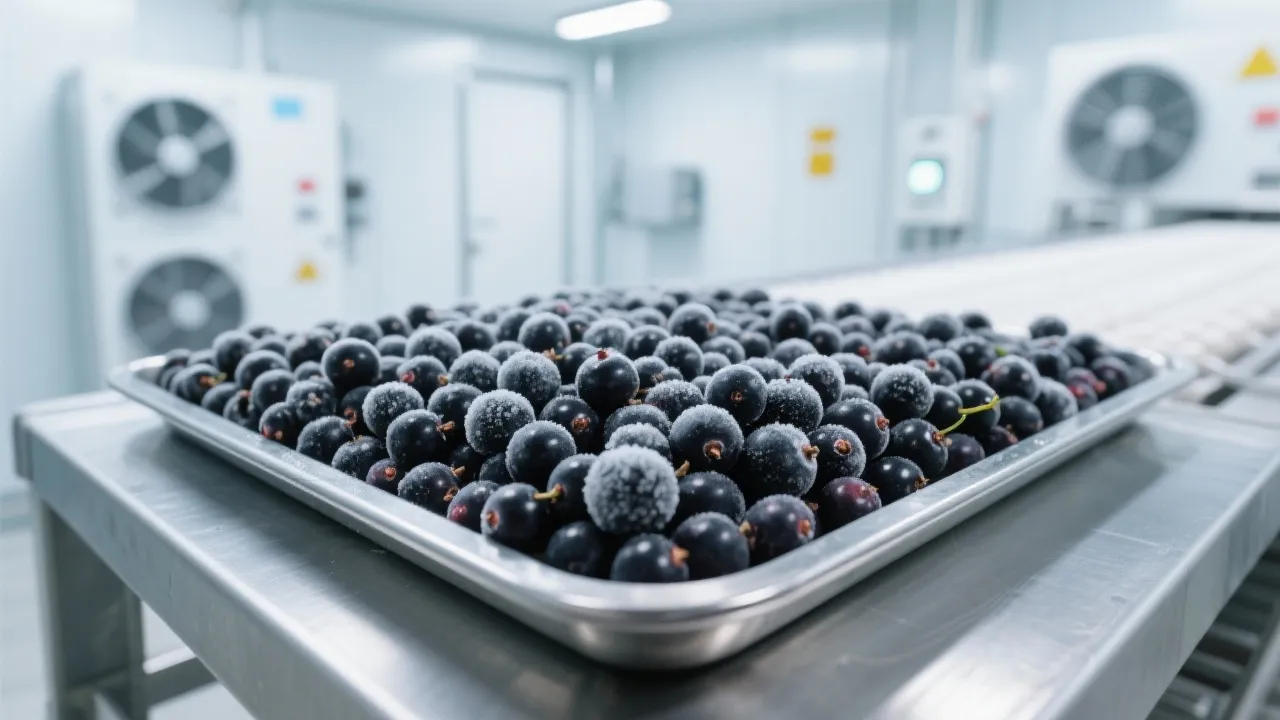
In practice, most industrial IQF lines target core product temperatures around -18°C (0°F) quickly, often using high-velocity cold air in fluidized beds or tunnels. The goal isn’t just “colder”—it’s faster passage through the maximum ice crystal growth zone (roughly -1°C to -5°C), where texture damage accelerates.
Freezing doesn’t sterilize; it mainly pauses biological activity. But how quickly the fruit reaches low temperature determines how much quality loss happens before the “pause” takes effect. For blackberries, two issues dominate: enzyme-driven changes (texture softening, color shifts) and microbial growth risk during slow chilling and handling.
Microbial behavior is equally practical: a slower process often implies longer exposure in “warm” zones (above 0–5°C) during pre-freeze staging, loading, or insufficient airflow. IQF systems, when paired with disciplined cold-chain handling, shorten that exposure and help plants maintain tighter, auditable controls.
Nutrition retention in frozen berries depends on cultivar, ripeness, oxygen exposure, blanching (usually not used for berries), packaging, storage time, and temperature stability. Still, across industry observations, IQF blackberries typically show better retention of vitamin C and anthocyanins compared with slower freezing, mainly because cell integrity and oxidation control are improved.
| Quality Indicator | Slow/Conventional Freezing (typical range) | IQF (typical range) | What It Means in a Beverage Plant |
|---|---|---|---|
| Vitamin C retention | ~70–85% | ~85–95% | Brighter “fresh” note; less need to compensate with acid/sweetener |
| Anthocyanin retention | ~75–90% | ~88–98% | More stable purple-black color; reduced browning/greying |
| Drip loss after thaw | ~8–15% | ~3–8% | More consistent Brix, less flavor dilution, cleaner equipment runs |
| Color (L*a*b* stability) | Moderate variability | Higher consistency | Less batch-to-batch adjustment in formulations |
Note: Values are practical reference ranges commonly cited in frozen fruit quality discussions; actual results vary by cultivar, oxygen exposure, packaging barrier, storage stability, and temperature fluctuations.
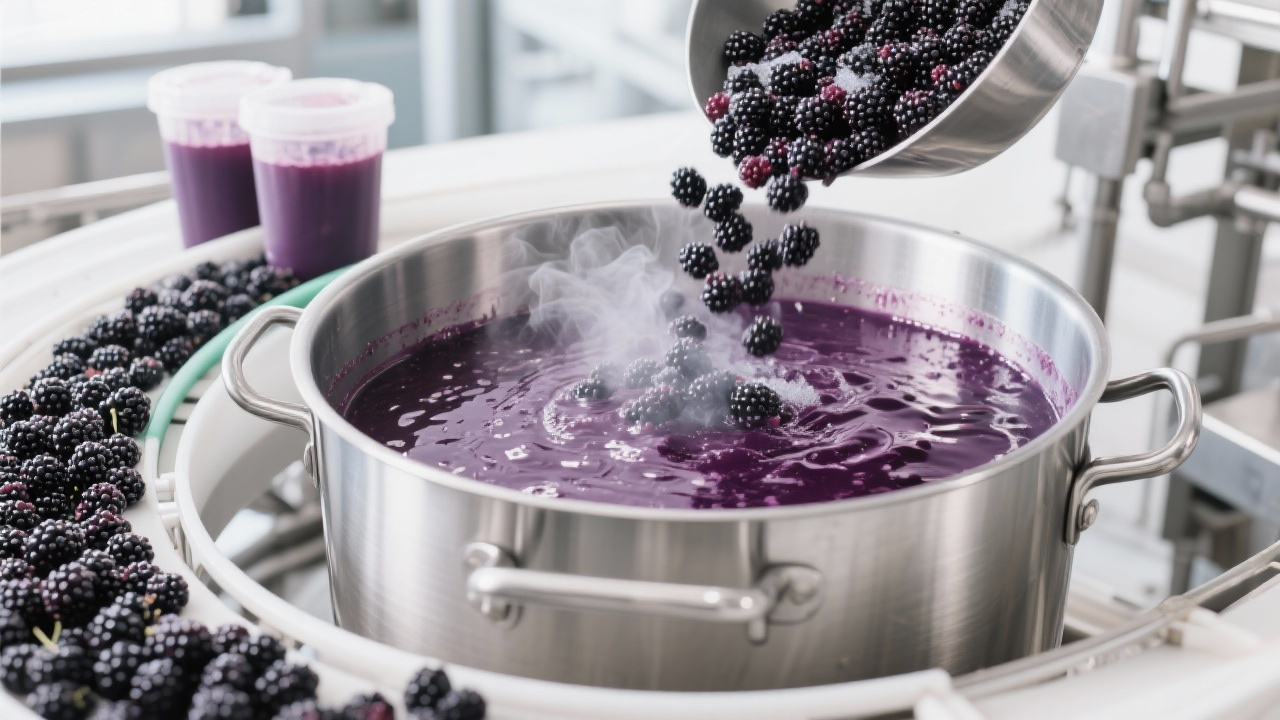
For brand teams, the headline benefit is that IQF helps your “fruit promise” survive real-world distribution. For plant teams, the benefit is less visible but just as valuable: fewer corrective actions—less rebalancing sweetness/acidity, fewer complaints about color drift, and fewer texture-related rejects.
IQF quality can be lost quickly if thawing and blending are treated like an afterthought. In beverage factories, the most common failure mode is a well-frozen berry that turns into inconsistent puree because the process creates oxygen exposure, localized warming, and uncontrolled shear.
Step 1 — Thaw with intention: Prefer controlled thawing at 0–4°C when the process allows. Rapid ambient thawing increases drip, oxidation, and microbial risk.
Step 2 — Capture the drip: If juice release is expected, account for it in the formulation rather than discarding. It carries pigments, acids, and aroma compounds that drive blackberry character.
Step 3 — Control oxygen exposure: Use covered vessels, minimize hold time, and consider inert gas blanketing for high-value SKUs where color stability is critical.
Step 4 — Use staged shear: Start with gentle mixing to distribute berries, then blend to target particle size. Excess shear can amplify astringency and seed bitterness in some profiles.
Step 5 — Standardize inputs: Track incoming lot specs (Brix, pH, color) and align with a formulation adjustment table to keep taste consistent across seasons.
A practical example from beverage lines: when the same IQF blackberry is processed with two different thaw profiles—overnight at 2°C versus 2 hours at room temperature—plants often observe differences in perceived freshness and color density, even if the recipe is identical. The reason is not “mystery chemistry”; it’s the combined effect of oxygen, temperature, and time on pigments and aromatics.
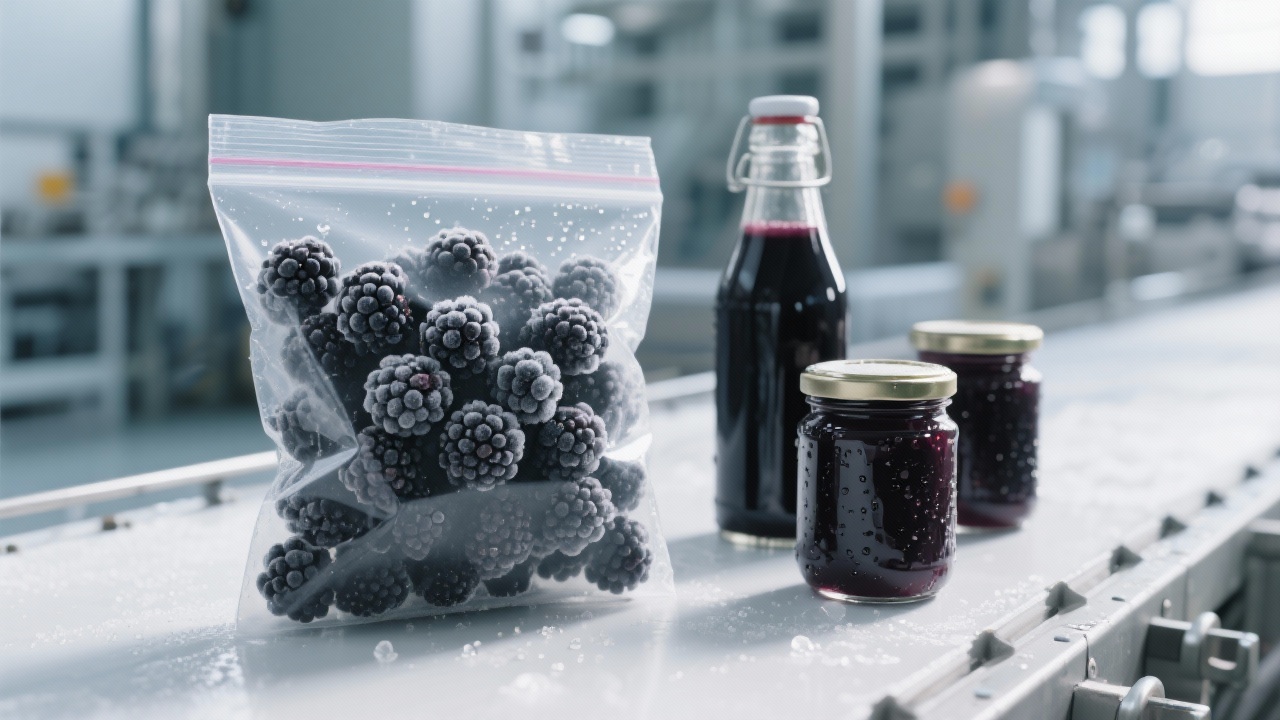
For facilities producing smoothies, fruit teas, yogurt drinks, or flavor bases, the winning mindset is to treat frozen berries as a precision ingredient rather than a commodity add-in. IQF gives you a head start; process discipline converts it into repeatable sensory results.
Frozen fruit is increasingly evaluated with the same rigor as flavors and functional ingredients. Buyers now expect documented lot consistency, traceability, and clear storage guidance—because a great IQF product can still underperform if temperature excursions occur during transit or warehouse rotation.
If your team is optimizing smoothies, fruit teas, syrups, dairy blends, or bakery fillings, the fastest wins often come from upgrading raw material consistency and cold-chain reliability—not from endless recipe tweaks.
Explore Yishangqiao’s premium IQF blackberries supply chain servicesTypical inquiry-ready info: spec sheet, grading options, packing formats, lot consistency support, and export documentation alignment.
No. IQF significantly reduces texture and drip issues by controlling ice crystals, but storage time, oxygen exposure, and temperature fluctuations can still affect vitamin C and color. IQF is a strong foundation; cold-chain stability completes the result.
When possible, controlled thawing at 0–4°C improves consistency and reduces oxidation and microbial risk. If faster thawing is needed, reduce exposure time and keep the process covered, with rapid transfer into blending or dosing steps.
Anthocyanins are sensitive to pH, oxygen, and metal ions, and can look different depending on the beverage base. Stabilizing pH targets, minimizing oxygen pickup, and using consistent lots help maintain a repeatable shade.
Treat IQF berries like standardized inputs: log Brix/pH/color for incoming lots, use a simple adjustment table for sweetness/acidity, and keep thawing time and mixing shear consistent. Many plants see the biggest improvements by tightening these three controls.

 68
|
68
|
 Blackcurrant quick - freezing
Liquid nitrogen freezing technology
Quality of frozen fruits
Juice and jam processing
Cold - chain transportation guarantee
184
|
frozen blackberry packaging solutions
custom frozen fruit packaging
organic frozen berries export
sustainable food packaging
B2B frozen produce packaging
369
|
frozen blackberry packaging solutions
custom packaging for frozen fruits
packaging innovation in frozen produce
customer retention packaging strategies
sustainable fruit packaging
161
|
Quick freezing technology
Nutritional retention of frozen blackberries
Organic frozen blackberries
Blackberry quality control
Fruit quick freezing
423
|
Quick-frozen blackberries
Nutrient retention in frozen blackberries
Frozen fruit preservation technology
Organic frozen blackberries
Food freezing process
Blackcurrant quick - freezing
Liquid nitrogen freezing technology
Quality of frozen fruits
Juice and jam processing
Cold - chain transportation guarantee
184
|
frozen blackberry packaging solutions
custom frozen fruit packaging
organic frozen berries export
sustainable food packaging
B2B frozen produce packaging
369
|
frozen blackberry packaging solutions
custom packaging for frozen fruits
packaging innovation in frozen produce
customer retention packaging strategies
sustainable fruit packaging
161
|
Quick freezing technology
Nutritional retention of frozen blackberries
Organic frozen blackberries
Blackberry quality control
Fruit quick freezing
423
|
Quick-frozen blackberries
Nutrient retention in frozen blackberries
Frozen fruit preservation technology
Organic frozen blackberries
Food freezing process


.png?x-oss-process=image/resize,h_100,m_lfit/format,webp)
.png?x-oss-process=image/resize,h_100,m_lfit/format,webp)
.png?x-oss-process=image/resize,h_100,m_lfit/format,webp)
 English


