
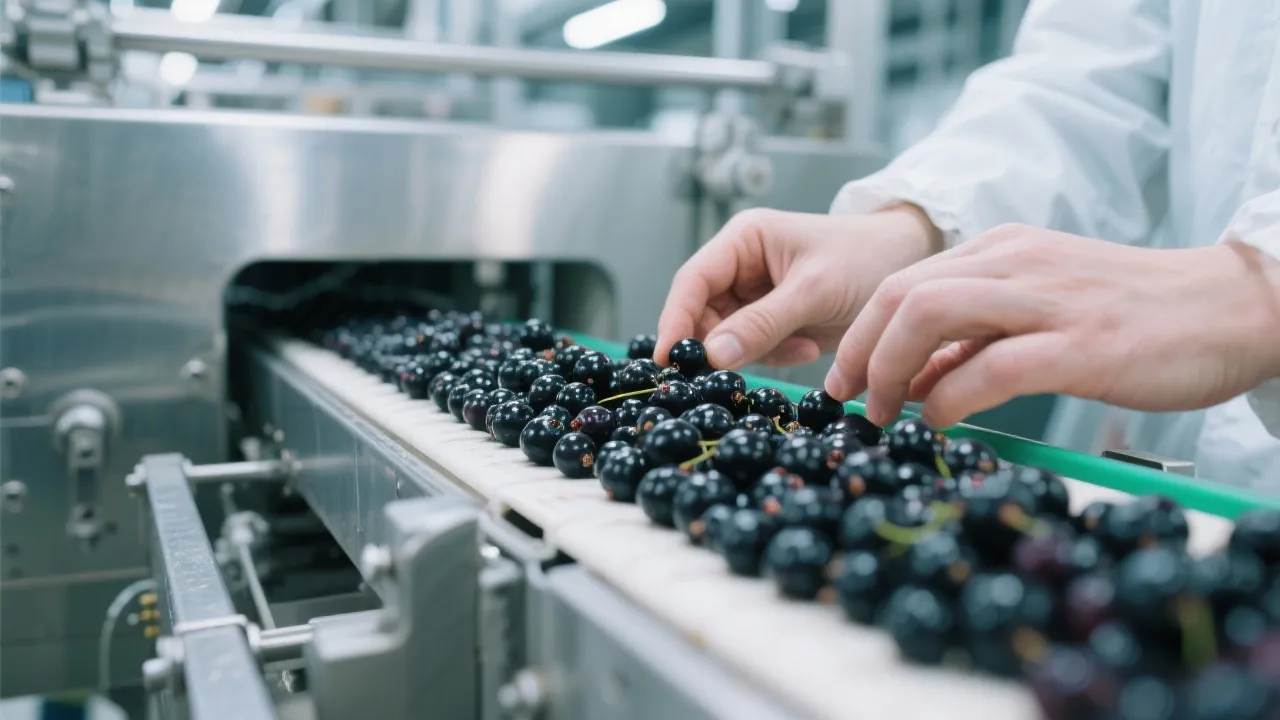
Meeting the stringent requirements of the European market for frozen black currants demands more than just compliance—it requires precision in every stage of production and logistics. According to the EU Regulation (EC) No 852/2004 on the hygiene of foodstuffs, raw materials must be handled under controlled conditions from harvest to export. For exporters aiming to secure long-term contracts with European buyers, achieving a whole fruit rate above 95% is no longer optional—it’s a benchmark.
“The EU’s cold chain audit system now penalizes suppliers who fail to maintain consistent temperature control below -18°C during transit. A single deviation can lead to rejection at customs.” — EFSA Food Safety Report, 2023
A leading Chinese exporter saw a dramatic improvement after implementing a three-stage manual sorting process followed by blast freezing at -40°C for 30 minutes. Prior to optimization, their average whole fruit rate was 78%. After adopting these techniques:
| Metric | Before | After Optimization |
|---|---|---|
| Whole Fruit Rate (%) | 78% | 96.2% |
| HACCP Compliance Score | 72/100 | 94/100 |
| EU Inspection Pass Rate | 81% | 97% |
This case demonstrates that targeted improvements—especially in pre-freeze handling and packaging—are critical. The use of vacuum-sealed polyethylene bags with oxygen scavengers reduced oxidation damage by over 40%, while maintaining consistent internal temperatures throughout transport.
To ensure consistency across batches, we recommend a structured approach:
These steps not only meet HACCP standards but also align with the expectations of major European retailers like Aldi and Carrefour, which now require full traceability from origin to shelf.
We offer small-batch trial orders and provide full international test reports—including microbiological, pesticide residue, and physical integrity assessments—to help you win buyer trust fast.
Get Sample Test Report Now


.png?x-oss-process=image/resize,h_100,m_lfit/format,webp)
.png?x-oss-process=image/resize,h_100,m_lfit/format,webp)
.png?x-oss-process=image/resize,h_100,m_lfit/format,webp)
 English


