
As demand for high-quality frozen blackcurrants in the European market soars, exporters worldwide must navigate intricate import standards and food safety regulations. The European Union’s (EU) regulatory framework mandates stringent criteria on microbiological limits, pesticide residues, and accurate labeling — with HACCP (Hazard Analysis Critical Control Point) certification serving as a pivotal gateway for market access. This article delves deep into the EU frozen blackcurrant import standards and illustrates how implementing HACCP principles ensures supply chain compliance, enhances product safety, and drives export success.
The EU Regulation (EC) No 2073/2005 establishes microbiological criteria for foodstuffs, including frozen fruits like blackcurrants. Key parameters include limits for pathogens such as Salmonella, Listeria monocytogenes, and E. coli, ensuring consumer safety through rigorous testing at multiple stages.
Additionally, maximum residue limits (MRLs) for pesticides are tightly controlled under the EU pesticide regulation framework, demanding precise agricultural practices and traceability. The labeling standards – specifying origin, weight, storage instructions, and best-before dates – must strictly adhere to the EU Food Information to Consumers Regulation (EU No 1169/2011).
Complying with these regulations is non-negotiable. HACCP certification underpins this by formalizing preventive control plans that identify critical points from fruit picking through freezing and storage, thereby minimizing hazards and ensuring compliance with EU mandates.
Exporters face complex challenges managing frozen blackcurrants’ journey across the supply chain. Here's an actionable breakdown:
| Supply Chain Stage | Key Compliance Focus | Operational Insight |
|---|---|---|
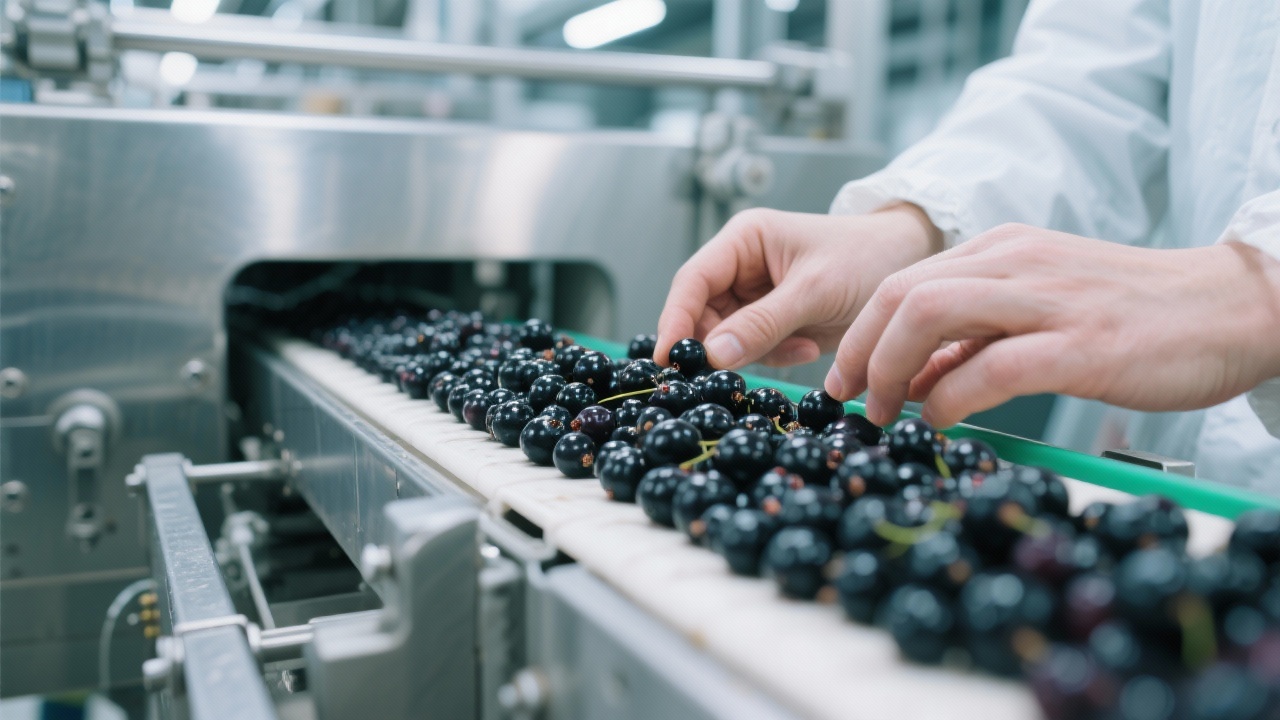
| Manual Sorting | Achieving >95% Whole Fruit Rate | Skilled staff and visual grading enable removal of damaged or subpar berries to meet EU quality benchmarks. |
| Rapid Freezing Process | Nutrient Preservation & Freshness Lock-in | Employing IQF (Individually Quick Frozen) technology reduces ice crystal formation, maintaining ingredient quality aligned with EU standards. |
| Third-Party Testing | Obtaining EU-Recognized Laboratory Reports | Accredited labs provide essential microbial and residue analysis verifying conformity to EU food safety limits. |
| Cold Chain Logistics | Maintaining Continuous -18°C Temperature Control | Temperature monitoring and documented traceability guarantee frozen products retain quality from origin to destination. |
Addressing operational gaps with innovative measures can elevate export readiness and customer trust:
These targeted improvements not only strengthen compliance but also enhance product competitiveness and foster buyer confidence, directly impacting repeat orders and brand reputation.
EU food safety regulations continuously evolve to address emerging risks and consumer demands. Companies like Yishangqiao (Hangzhou) International Trade Co., Ltd. showcase how integrating HACCP certification into their operational DNA fosters resilience. Through small-batch trial orders and OEM customization services, Yishangqiao supports exporters to adapt swiftly, maintain compliance, and expand into the EU market effectively.
Persistent adherence to stringent import standards and proactive supply chain optimization present sustainable advantages that transcend mere rule-following — establishing long-term partnerships based on trust and product excellence.
Exporters should consistently evaluate whether their supply chain meets these rigorous standards. Key questions to consider:



.png?x-oss-process=image/resize,h_100,m_lfit/format,webp)
.png?x-oss-process=image/resize,h_100,m_lfit/format,webp)
.png?x-oss-process=image/resize,h_100,m_lfit/format,webp)
 English


