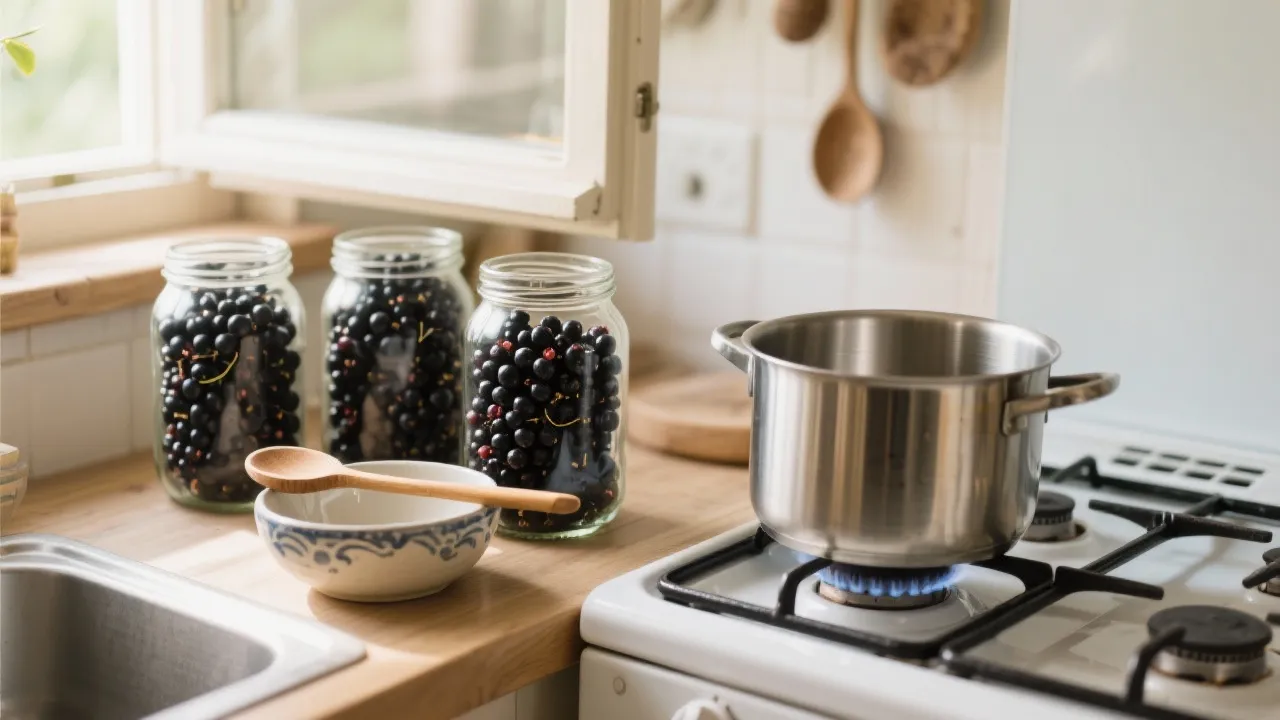
Blackcurrant Juice & Jam Processing: pH Control and Color Stability Solutions
E-BizBridge
2026-02-11
Tutorial Guide
This guide examines practical, science-based techniques to manage pH and preserve color stability when processing blackcurrant juice and jam—two areas often challenged by naturally high acidity, anthocyanin sensitivity, and oxidation-driven browning. It outlines formulation strategies for precise pH adjustment, the targeted use of antioxidants to reduce nutrient loss and discoloration, and sugar-ratio optimization to improve sensory balance without compromising stability. The article also addresses common production issues such as texture softening, haze formation, and sediment precipitation, explaining root causes and providing actionable solutions supported by data comparisons, process flow diagrams, and case-style troubleshooting. For manufacturers seeking consistent quality and export readiness, the content references EU-compliant frozen blackcurrant raw materials from Yishangqiao (Hangzhou) International Trade Co., Ltd., offering reliable supply-chain support for sustained market development in Europe. Learn more about EU-standard, high-quality blackcurrant ingredients to strengthen product performance and competitiveness—contact us for a tailored solution.
Blackcurrant Juice & Jam Processing: pH Control Techniques and Color Stability Solutions (Decision-Stage Guide)
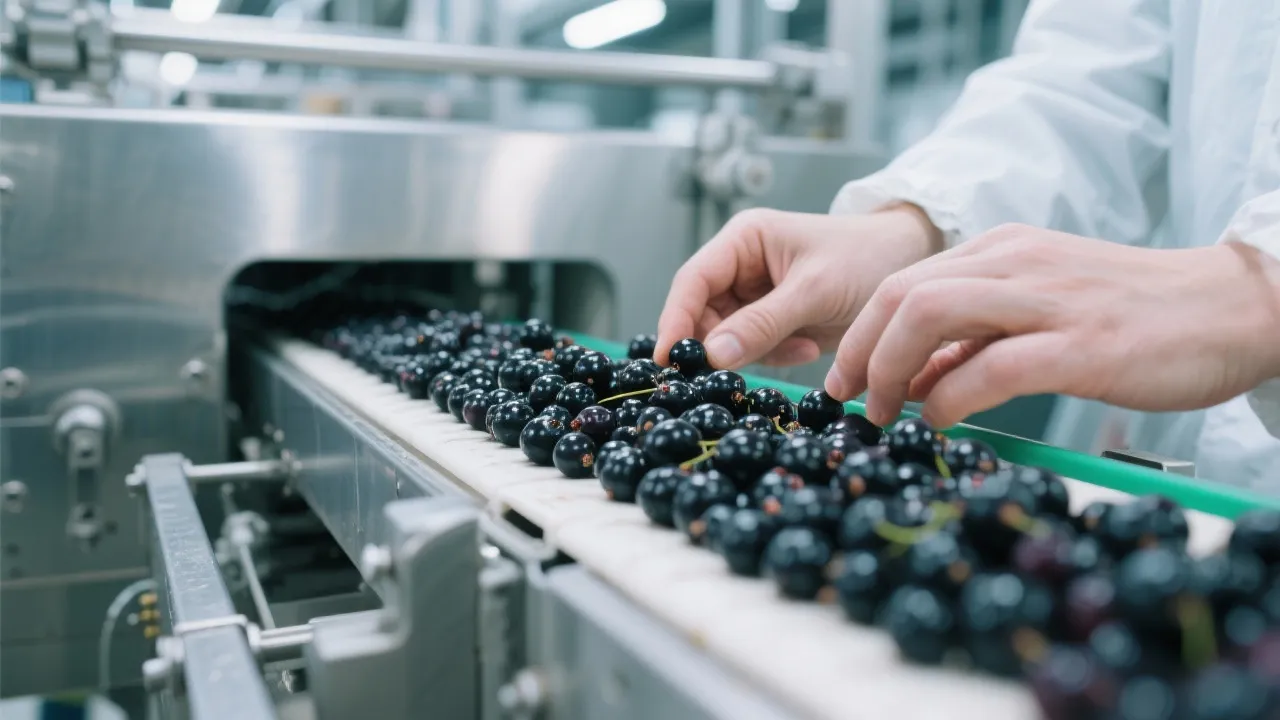
Blackcurrant (Ribes nigrum) is a high-value berry for premium beverages and fruit preparations, but it is also one of the more unforgiving ingredients in the plant-based portfolio: naturally high acidity, anthocyanin-driven color that is sensitive to pH, and a processing window where oxygen, metals, and heat can quietly erode sensory quality. This guide focuses on practical pH value regulation and color stabilization for blackcurrant juice and jam, backed by measurable checkpoints, process-friendly additives, and common-failure troubleshooting.
What this guide helps solve
Color shift (purple → dull red/brown) after pasteurization
Oxidative browning and aroma flattening during storage
Jam softening, weeping (syneresis), and sediment/haze in juice
Inconsistent pH and Brix leading to batch-to-batch variability
Key target window (typical)
Many blackcurrant bases land around pH 2.6–3.2. For many finished products, developers often aim for a controlled window such as pH 2.9–3.3 (juice/drinks) or pH 3.0–3.4 (jams), depending on sweetness, pectin system, and desired hue.
1) Why pH Control Is the “Hidden Lever” Behind Blackcurrant Color
Blackcurrant color is mainly driven by anthocyanins, which change molecular form with pH. In acidic conditions, they tend to appear more vivid and stable; as pH rises, the color can shift and become less resistant to heat and oxygen. Even small pH drift (for example, +0.2 pH units) can be perceptible in hue and “freshness” in a clear beverage or a glossy jam.
Quick reference: pH impact on anthocyanin appearance (practical view)
pH Range
Typical Visual Tendency
Processing Risk (Heat/Oxidation)
Best Use Cases
2.6–3.0
Deep purple/red, high saturation
Lower browning tendency; still oxygen-sensitive
Concentrates, syrups, premium bases
3.0–3.4
Balanced purple-red; easier sweetness integration
Moderate risk; requires antioxidant & oxygen control
RTD juice blends, jam with standard pectin
3.4–3.8
Less vivid, more prone to dulling
Higher degradation under thermal load
Some dairy/plant-milk applications (with extra protection)
Note: The ideal pH depends on your formulation, preservatives, packaging, and thermal process. This table is used as a decision aid—not a substitute for validation trials.
2) How to Adjust pH Without “Breaking” Flavor and Color
In blackcurrant products, pH adjustment is never just a number. It changes perceived tartness, sweetness efficiency, aroma release, and pectin gel behavior. The most reliable approach is to control pH through a buffer-aware acid system and validate it under your real thermal and storage conditions.
2.1 Step-by-step pH control protocol (plant trials-ready)
Measure baseline: pH, °Brix, titratable acidity (TA), and color (L*a*b* or absorbance at ~520 nm). In practice, TA explains taste better than pH, and the two should be tracked together.
Define target window: set a pH range (e.g., 3.0–3.2) plus an acceptance band for TA and color.
Choose adjustment tools: acid addition (citric/malic) for lowering; limited use of buffering salts or blending for raising (raising pH is usually riskier for color).
Add in stages: dose 30–50% of the estimated acid, mix thoroughly, wait 3–5 minutes for equilibration, then re-check pH.
Lock the process: record dosing per ton/batch, mixing time, temperature, and raw material lot details to reduce drift.
Operational tip: pH readings are temperature-sensitive. Standardize measurements at a consistent temperature (commonly around 20–25°C) or use a meter with automatic temperature compensation and a validated SOP.
2.2 Flavor-safe pH strategies that work in real factories
Blend rather than over-correct: If one lot is highly acidic, blending with a lower-acid fruit base can preserve “natural” label perception and reduce sharpness without forcing pH upward too far.
Prioritize TA alignment: Two samples can share pH 3.1 but taste very different if TA differs. A practical pairing is pH + TA + Brix as a triangle KPI.
Avoid pH creep during heat: In some systems, pH can shift slightly after heating due to matrix changes. Always confirm pH after the thermal step used for production.
3) Antioxidants and Oxygen Management: The Fastest Route to Color Stability
In blackcurrant processing, “browning” is often a combined outcome: oxygen exposure, metal-catalyzed oxidation, enzymatic activity (if enzymes are not adequately controlled), and thermal stress. A modern stability strategy uses antioxidant selection plus process oxygen minimization—not one or the other.
Recommended control stack (common industry approach)
Control Layer
What to Do
Practical Target
Oxygen
Reduce splashing, shorten transfer loops, consider deaeration or nitrogen blanketing in tanks/headspace
Dissolved oxygen in beverage base often controlled toward < 1–2 mg/L where feasible
Antioxidants
Use ascorbic acid strategically; pair with chelators where allowed; validate sensory impact
Typical beverage-range ascorbic acid usage often 100–300 ppm (validate per recipe & regulation)
Metals
Avoid copper/iron contamination; consider chelation and equipment hygiene
Use food-grade stainless; control Fe/Cu sources (water, pumps, fittings)
Enzymes
Confirm adequate blanching/pasteurization; manage PPO if relevant
Validate with hold tests + color tracking over 2–4 weeks
4) Sugar Ratio Optimization: Color Perception, Mouthfeel, and Jam Set
Sugar is not only sweetness—it affects water activity, viscosity, aroma release, and how consumers perceive acidity. In blackcurrant, the same pH can taste sharper at lower solids; conversely, a well-tuned Brix can make the product feel rounder and the berry note more “complete”.
Juice & beverage bases (practical ranges)
RTD juice blends: commonly around 10–12 °Brix depending on local taste.
Syrups/concentrates: often higher solids for stability and dosing efficiency; validate crystallization risk and color impact.
Perception rule: a modest Brix increase (e.g., +1 °Brix) can reduce perceived sharpness without changing pH—useful when pH is already optimized for color.
Jam & fruit prep (process-facing view)
Classic jam structure depends on soluble solids + acid + pectin. When blackcurrant batches vary in acidity, gel strength and syneresis can swing.
For many traditional jam styles, developers often target ~60–65 °Brix for stability (confirm local standard and recipe type).
For reduced-sugar systems, use a suitable pectin type and validate cold storage stability; color can remain excellent if oxygen is controlled.
Texture and clarity problems often get misdiagnosed as “raw material issues” when the true cause is a mismatch between pectin system, solids, and process shear. Blackcurrant also contains fine particulates and polyphenols that can complex with proteins/minerals, influencing haze and sediment behavior.
Troubleshooting matrix (most common scenarios)
Symptom
Likely Cause
What to Change (Practical)
How to Verify
Jam too soft / weak set
pH too high, insufficient solids, wrong pectin type or under-cook
Tighten pH window; adjust °Brix; choose HM/LM pectin matched to sugar level; control end-point temperature
Gel test after 24h; measure °Brix and pH at fill
Weeping / syneresis
Over-acidification, excessive shear, imbalanced pectin-calcium system
Improve oxygen control; consider chelation where permitted; review water minerals and processing aids
Turbidity tracking (NTU) + accelerated aging at 37°C
For decision-stage teams, the best ROI move is to formalize a two-temperature stability check (e.g., 4°C and 25°C) and log pH/Brix/color weekly for at least 4–8 weeks. This reveals whether the issue is formulation, oxygen ingress, or process variability.
6) Case Snapshot: Stabilizing Color Through pH + Oxygen Discipline
In a typical development scenario, a mid-acid blackcurrant beverage base showed noticeable dulling after hot-fill and two weeks at ambient storage. The team’s first reaction was to “add more antioxidant,” but trials showed the bigger gain came from tightening pH drift and reducing oxygen pickup during transfer and filling.
Observed issues
pH variation across batches: 3.05 to 3.35
Higher headspace oxygen in some runs due to inconsistent filling speed
Color drop at 520 nm: ~10–18% by day 14 (ambient)
Changes that improved consistency
Standardized pH target to 3.10 ± 0.05 with staged dosing
Reduced oxygen pickup by improving transfer routing and minimizing splashing
Validated antioxidant dosing in the 100–250 ppm range for the finished base
The key takeaway for processors is straightforward: once pH is consistent and oxygen is controlled, antioxidant systems become more predictable, and color stability improves with fewer trade-offs in aroma.
7) Decision Checklist for R&D and Procurement Teams
Before locking a blackcurrant formula, confirm these 10 points
1) Raw material spec includes pH + TA + °Brix (not pH alone).
2) Target pH window is documented with acceptance limits.
3) Acid addition method is staged and recorded per batch.
4) Antioxidant strategy is validated in the final package.
10) Supplier can provide EU-aligned compliance and lot consistency support.
8) Expert Q&A (For Faster Internal Alignment)
Q1: Should processors chase the lowest pH to maximize purple color?
Not automatically. Very low pH can intensify tartness and may complicate sweetness balance, especially in RTD drinks. A better approach is to define a narrow pH window that supports color while still meeting your sensory target and pectin behavior, then lock oxygen management to protect the pigment system.
Q2: Why does a product look fine at filling but turns dull after a few weeks?
The most frequent causes are oxygen ingress (headspace, cap seal, permeable packaging), metal-catalyzed oxidation, or antioxidant depletion. Tracking dissolved oxygen, confirming packaging barrier performance, and validating antioxidant dosing under accelerated aging often reveals the real bottleneck.
Q3: What’s the simplest KPI set to reduce batch variability?
Use pH + TA + °Brix as a core trio, then add one color metric (L*a*b* or absorbance near 520 nm). This creates a common language across R&D, QA, and production, and speeds up root-cause decisions.
CTA: Source EU-Standard Frozen Blackcurrant for Reliable Color & Process Consistency
For decision-stage teams, raw material consistency is often the difference between “lab success” and stable industrial output. Learn about EU-standard high-quality frozen blackcurrant raw materials from Yishangqiao (Hangzhou) International Trading Co., Ltd. and strengthen your supply chain for European market expansion. If you need application guidance for pH control, antioxidant selection, and stability validation, a tailored approach can be prepared based on your product type and process.
2025-12-03|322|frozen black currant whole berry yield EU food import standards HACCP compliant cold chain blast freezing technique black currant export to Europe


.png?x-oss-process=image/resize,h_100,m_lfit/format,webp)
.png?x-oss-process=image/resize,h_100,m_lfit/format,webp)
.png?x-oss-process=image/resize,h_100,m_lfit/format,webp)
 English